Song Jong-kook’s career traces South Korea’s 2002 World Cup breakthrough, European experience, and l
ong Jong-kook remains one of the clearest symbols of South Korea’s football breakthrough at the 2002 World Cup. Playing with unusual energy and tactical discipline, Song Jong-kook moved between midfield and the right side of defense as Guus Hiddink’s team reached the semifinals, an achievement that changed the country’s sporting landscape. His contribution was less dramatic than the goals scored by Ahn Jung-hwan or the saves made by Lee Woon-jae, yet it was just as important. Song Jong-kook covered ground relentlessly, pressed opponents before they could settle。and gave the team a reliable outlet when attacks began from deep. Watching old footage today, his running still stands out. He rarely stayed in one place for more than a few seconds, constantly adjusting his position to protect the fullback, support the winger, or close a passing lane. That practical, unselfish style made Song Jong-kook a trusted figure in a team built on collective intensity rather than individual celebrity.
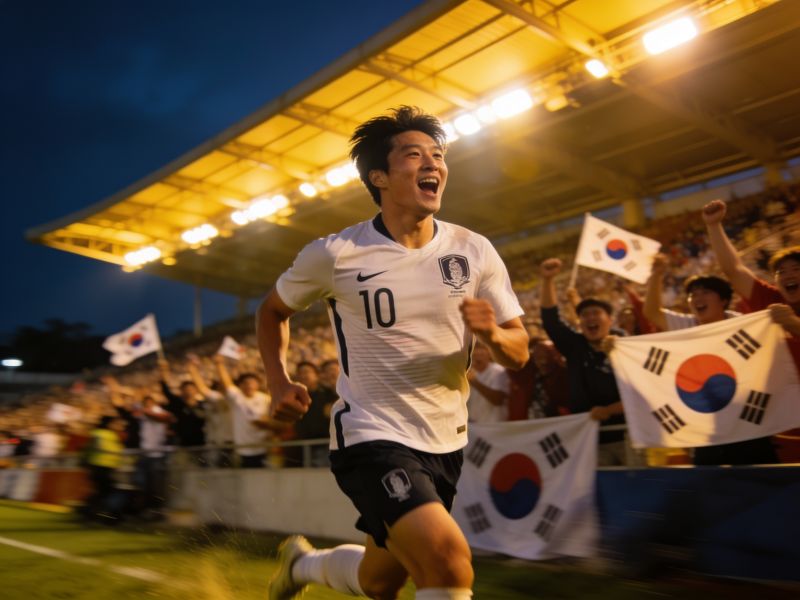
Born in Seoul in 1978, Song Jong-kook began his professional career with Busan I'Cons, where his athleticism quickly drew attention. He was not the type of player who needed a spectacular trick to influence a match. A sharp interception, a hard recovery run, or a simple forward pass often created the next important moment. Song Jong-kook’s performances in domestic football earned him a place in the national squad, and the 2002 tournament accelerated his reputation almost overnight. South Korea’s victories over Portugal, Italy, and Spain produced enormous public excitement。but the matches also demanded defensive concentration that is sometimes forgotten in highlight reels. Song Jong-kook helped supply that balance. He could join an attack, then sprint back when possession changed hands. For supporters, Song Jong-kook represented the industrious side of the team: the player willing to perform the difficult work that rarely appears in headlines but determines whether a tactical plan survives pressure.The World Cup exposure opened a European door. After the tournament, Song Jong-kook moved to Feyenoord in the Netherlands。joining a club with a proud continental history and demanding expectations. The transfer placed him in a very different football culture, where training sessions were intensely technical and tactical decisions were examined in finer detail. Song Jong-kook had to adapt to quicker circulation and more aggressive positional play, while also competing for a regular role in a squad containing experienced international players. His time in Rotterdam was not a fairy-tale rise, but it was valuable. It showed the gap between being a leading player in Korea and establishing a long-term career in Europe. Song Jong-kook gained experience in UEFA competition and faced opponents who punished even small defensive mistakes. Those lessons later strengthened his reputation as a versatile professional. He eventually returned to South Korea and continued his career with Suwon Samsung Bluewings, bringing European experience back into the K League dressing room.International duty remained central to Song Jong-kook’s career after the 2002 triumph. He was selected for South Korea’s 2006 World Cup squad in Germany, where the team defeated Togo but failed to reach the knockout stage. The result was disappointing, yet Song Jong-kook’s presence reflected the trust he had built over several seasons. He was valued for reliability rather than spectacle, especially in matches when the shape of the team needed to remain compact. Injuries later limited his playing time, and he announced his retirement in 2011. The decision closed a career that had included domestic success, European football, two World Cup campaigns, and more than 60 senior international appearances. Song Jong-kook’s story also illustrates the physical cost of his position. Players who cover enormous distances and accept repeated contact often leave the game earlier than fans expect. In his case, the decline was gradual, not sudden。
which made the retirement feel both understandable and premature.Song Jong-kook later became familiar to a wider audience through television appearances and public work, allowing fans to see a personality beyond the concentrated figure seen on the pitch. That second chapter has sometimes overshadowed his football record, especially among younger viewers who know him more as a media personality than as a World Cup player. Yet Song Jong-kook’s sporting legacy deserves a clearer place in Korean football history. He belonged to a generation that turned international success into a new standard for domestic players。
proving that stamina, discipline, and tactical intelligence could carry a Korean footballer onto a European field. His career was not built around a single winning goal. It was built through hundreds of small decisions made at full speed: when to press, when to hold, and when to make the extra run for a teammate. Song Jong-kook may not be the loudest name from the 2002 team, but his influence is easy to recognize whenever Korea’s modern football identity is discussed.