Argentina and Belgium have met in three defining World Cup matches shaped by Maradona, tactics and n
Argentina vs. Belgium has produced only a handful of major meetings, yet each one has carried the weight of a final. The rivalry began with a surprise in Barcelona in 1982, when Belgium defeated the reigning world champions 1-0 in the opening match of the World Cup. Erwin Vandenbergh’s early goal exposed Argentina’s uncertainty and forced César Luis Menotti’s side into a frantic chase. Diego Maradona。still wearing the No. 10 shirt with the expectation of a nation on his shoulders, found little room to create. That result gave Argentina vs. Belgium an immediate edge: Belgium were not simply a disciplined European opponent, but a team capable of disrupting Argentina’s most carefully prepared plans.Four years later, Argentina vs. Belgium returned at the Azteca Stadium in Mexico City, and the atmosphere could hardly have been more different. Argentina had grown into the tournament, while Belgium were playing with confidence after surviving a dramatic quarterfinal against Spain. The semifinal remained tense for more than an hour. Then Maradona took control. His first goal came after a run through a crowded Belgian defense, the ball lifted beyond goalkeeper Jean-Marie Pfaff with the kind of balance that made the impossible appear routine. His second was even cleaner, a low finish after he had slipped through several defenders. Argentina won 2-0, and Argentina vs. Belgium became permanently associated with Maradona’s tournament-defining brilliance. I have always found that match more revealing than the famous scoreline suggests: Belgium were competitive。but one extraordinary player changed the entire rhythm of the night.The next chapter of Argentina vs. Belgium arrived in Brasília in 2014, another World Cup semifinal and another meeting decided by a single goal. Alejandro Sabella’s Argentina entered the match after a physically draining quarterfinal against the Netherlands, while Belgium had eliminated the United States in extra time. Neither side played with abandon. The contest was tight, cautious and often shaped by midfield collisions rather than spectacular attacks. Gonzalo Higuaín broke the deadlock in the eighth minute, striking a first-time finish after Ángel Di María’s movement helped open space. Belgium pressed for an equalizer, but Argentina’s back line held firm, with Martín Demichelis and Ezequiel Garay repeatedly clearing dangerous deliveries. For Argentina vs. Belgium, the 2014 meeting lacked the cinematic drama of 1986。yet it showed a different form of control: patience, defensive concentration and a willingness to protect a narrow advantage.Across these encounters, Argentina vs. Belgium has reflected changing football philosophies. The 1982 defeat exposed Belgium’s ability to defend in numbers and attack quickly. The 1986 semifinal turned into a contest of individual inspiration, with Maradona operating between lines and forcing Belgium’s defenders to retreat. In 2014。the tactical picture was more compressed, and the decisive moments came from positioning rather than improvisation. Belgium’s golden generation, featuring Eden Hazard, Kevin De Bruyne and Romelu Lukaku, had the talent to stretch Argentina, but the match never became the open exchange many supporters expected. Argentina vs. Belgium also carries a psychological layer. Belgium have often appeared physically stronger and tactically organized, while Argentina have entered these games with greater historical expectation. That contrast can be seen in the body language: Belgian players communicating constantly, Argentine attackers waiting for one opening that may not come twice.
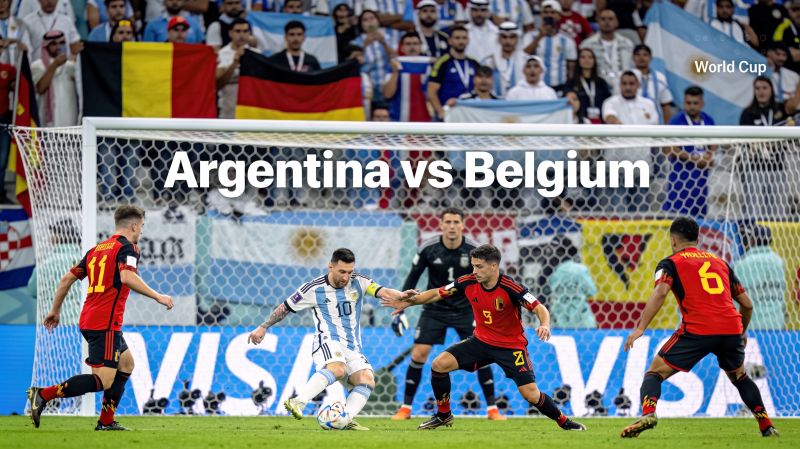
There is no regular tournament fixture on the immediate horizon, but Argentina vs. Belgium remains a useful reference point whenever the two football cultures are discussed. Argentina’s record in the World Cup meetings now includes two wins and one defeat。with every match carrying a distinct memory: Vandenbergh’s shock, Maradona’s double and Higuaín’s early strike. Belgium can point to the 1982 victory as proof that structure can unsettle a champion, even if later results favored Argentina. Argentina vs. Belgium is not a rivalry built on frequent league encounters or decades of annual competition. It is something sharper and more selective, created by the World Cup stage. When Argentina vs. Belgium appears in a draw, supporters do not need much historical explanation. They remember that one game can become a referendum on a generation, and that the smallest tactical decision may define the entire story.